
Workshops
All authors, speakers, panelists, presenters, and attendees are required to register and pay the conference fee to participate in the IEOM Conference:
Submission Link: https://www.xcdsystem.com/IEOM/abstract/index.cfm?ID=7v4USiq
Registration Link: https://www.xcdsystem.com/IEOM/attendee/index.cfm?ID=O1lLs2m
Workshop I:
Six Sigma Yellow Belt Workshop and Exam
6:00 – 8:00 pm, February 2, 2026
Workshop 1.5 Hours + Exam 0.5 Hour
Speaker: Dr. Ahad Ali, Lawrence Technological University, Southfield, Michigan, USA
Six Sigma Certification Topics
- Six Sigma Fundamentals
Define
- Project Charter
- Process Maps, SIPOC, Matrix Diagrams, Critical to Quality (CTQ) Metrics, and DPMO
- Pareto Chart
- SIPOC
Measure
- Process analysis
- Probability, Statistics and Distribution
- Data collection and analysis
- Gage Repeatability and Reproducibility (R&R)
- Process capability
- X-Bar Charts, Run Charts, Moving Average Charts, EWMA Charts, Attribute Charts, Takt Time, Standardization, Spaghetti Diagrams, and Setup Reductions
Analyze
- Value Stream Map
- Hypothesis Testing
- Goodness of fit test
- Regression Analysis
- Cause & Effect Diagrams
- Scatter Diagrams
- ANOVA
- Confidence Interval
Improve
- Lean Tools to reduce NVA: 5S, Kaizen, Seven Zeros, TPS Principles, FMEA, and Simulation
- Design of Experiments (DOE)
- Statistical Process Control (SPC)
- Analysis of Variance (ANOVA)
- Solutions Validation
Control
- Control Plan
- SPC
- Tracking
- DFSS
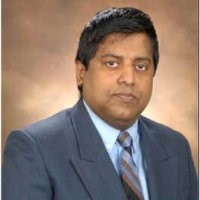
Dr. Ahad Ali
Associate Professor
Director of Bachelor of Science in Industrial Engineering
Director, Master of Science in Industrial Engineering
Director of Smart Manufacturing and Lean Systems Research Group
A. Leon Linton Department of Mechanical, Robotics and Industrial Engineering
Lawrence Technological University, Southfield, Michigan, USA
Executive Director, IEOM Society International
Dr. Ahad Ali is an Associate Professor and Director of Bachelor of Science in Industrial Engineering and Master of Science in Industrial Engineering in the A. Leon Linton Department of Mechanical, Robotics and Industrial Engineering at the Lawrence Technological University, Michigan. Dr. Ali is the Director of Smart Manufacturing and Lean Systems Research Group. He earned B.S. in Mechanical Engineering from Khulna University of Engineering and Technology, Bangladesh, Masters in Systems and Engineering Management from Nanyang Technological University, Singapore and Ph.D. in Industrial Engineering from University of Wisconsin-Milwaukee. Dr. Ali is the Executive Director of IEOM Society and Conference Chair of the Sixth International Conference on Industrial Engineering and operations Management, Kuala Lumpur 2016. He advised six doctorate students in Doctor of Engineering in Manufacturing Systems. Dr. Ali has published journal and conference papers. He was past President of IIE Lean Division. Dr Ali has done research projects with Chrysler, Ford, DTE Energy, Delphi Automotive System, GE Medical Systems, Harley-Davidson Motor Company, International Truck and Engine Corporation (ITEC), National/Panasonic Electronics, and Rockwell Automation. His research interests include quality, reliability, six sigma, manufacturing, simulation, optimization, scheduling, maintenance, e-manufacturing, lean, CAE and GD&T and. He is a member of ASEE, IEEE, IEOM, INFORMS, and SME.
6:00 – 8:00 pm, February 3, 2026
Workshop II:
Machine Learning Approach for the prediction of Structural and Ferroelectric Properties of Two-Dimensional (2D) Halide Perovskite Materials
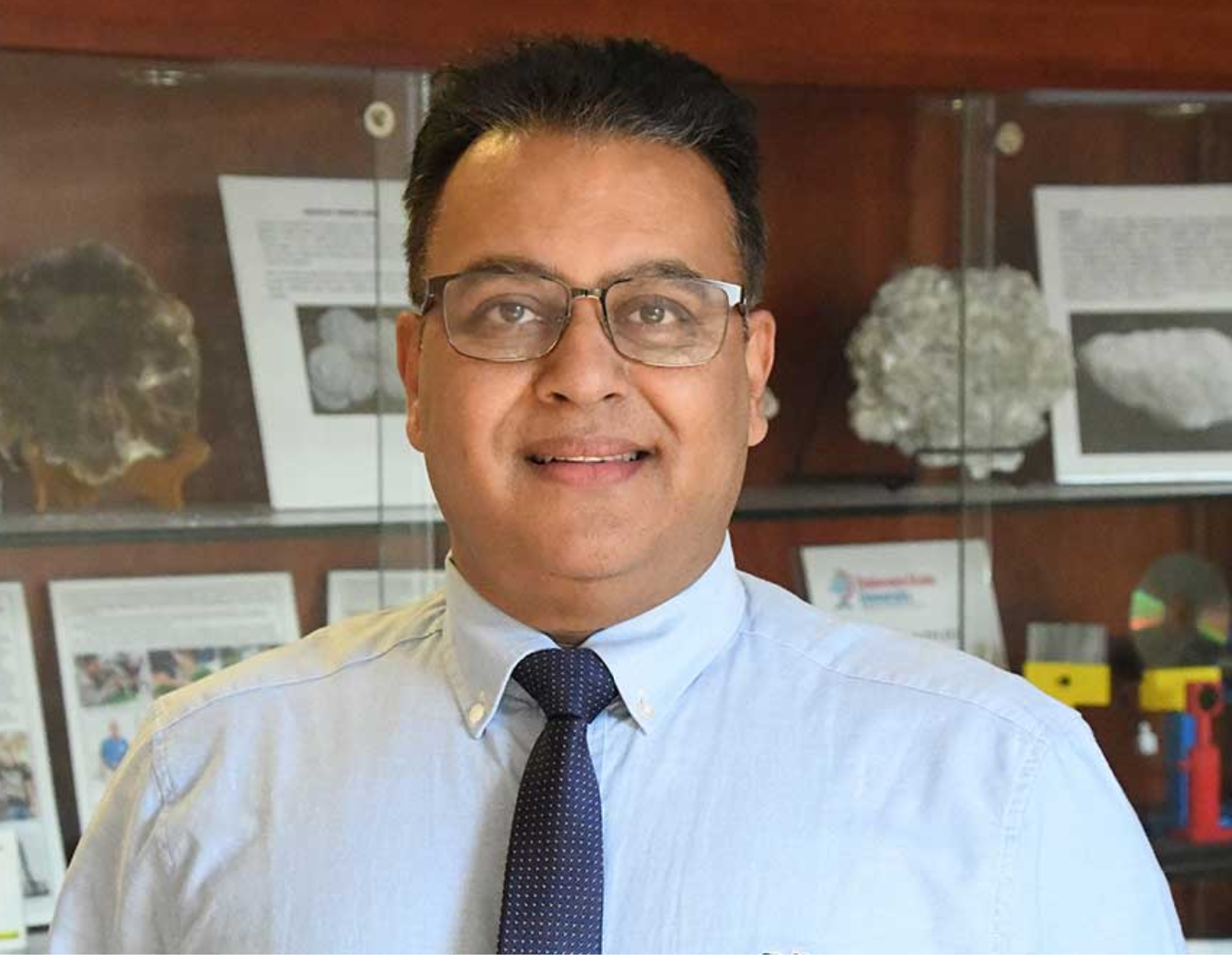 Prof. Dr. Mukti M. Rana
Engineering Division of Physical and Computational Sciences &
Director and Principal Investigator, Optical Science Center for Applied Research
Delaware State University
Dover, DE, USA
Dr. Mukti Rana is a Professor of Engineering and Director and Principal Investigator at the Optical Science Center for Applied Research (OSCAR) at Delaware State University (DSU). Dr. Rana received his B.Sc. in Electrical and Electronics Engineering from the Khulna University of Engineering and Technology, Bangladesh (1992-1997), and his M.S. (2000-2002) and Ph.D. (2003-2007) from The University of Texas at Arlington (UTA) in Electrical Engineering. He also worked as graduate teaching assistant, graduate research assistant and post-doctoral research associate (2007-2008) in the Department of Electrical Engineering during his tenure at UTA. In fall 2008, Dr. Rana joined as an Assistant Professor in the Department of Electrical and Computer Engineering at The University of South Alabama, Mobile. In 2010, he joined in the Department of Physics and Engineering and OSCAR of DSU. Dr. Rana’s research projects are supported by the Department of Defense (US Army, Navy and Air Force), National Science Foundation (NSF) and National Institute of Health (NIH) and. Dr. Rana served the principal investigator of Optics for Space Technology and Applied Research Center funded by the National Aeronautics and Space Administration (NASA) and Optical Science Center for Applied Research (OSCAR) funded by NSF. Both of these grants were funded for 5 Million US dollars for 5 years. Dr. Rana has secured more than 13 Million US Dollars in research funding during his tenure at DSU. Currently there are five graduate, three undergraduate, and three high school students work at Dr. Rana’s research laboratory -Laboratory for Optical Sensing and Energy Conversion. His current research interest includes – thin film’s properties for microsensors’ applications, uncooled infrared detectors and microelectro-mechanical (MEMS) devices. Dr. Rana has published more than thirty-four refereed journal articles and conference proceedings, one book, one book chapter and holds three patents. Dr. Rana is a member of the IEEE, SPIE and the founding student advisor of IEEE student branch at DSU. Between Fall ‘15- Fall ‘20, Dr. Rana demonstrated outstanding leadership to advise and mentor 124 middle school, 56 high school, 200+ undergraduate and 33 graduate students, 21 middle and high school science teachers, 7 junior faculty members and 3 post-doctoral research associates. Dr. Rana is the recipient of “Faculty Mentor of The Year Award, NASA, 2019” for his contribution towards advising and mentoring of students. He is also the recipient of excellence in mentoring award in 2021, research award in 2016, vice president’s award for excellence in research in 2015 and excellence in outreach award 2015 for the college of mathematics, natural sciences and technology of DSU.
Workshop III:
6:00 – 8:00 pm, February 4, 2026
Innovation and Digital Transformation in Work Environments:
From Exploring Opportunities to Leading Change and Shaping the Future
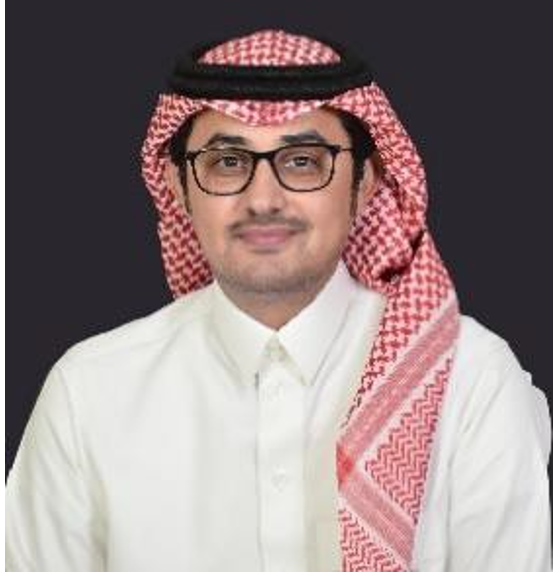 Dr. Mohammed Al Awadh
Associate Professor
Department of Industrial Engineering
King Khalid University (KKU)
Abha, Saudi Arabia
Bio
Dr. Mohammed Al Awadh is an Associate Professor in the Department of Industrial Engineering at King Khalid University (KKU) in Abha, Saudi Arabia.
He specializes in quality engineering, statistical analysis, Lean Six Sigma, and reliability engineering. Holding a Ph.D. in Industrial Engineering, Dr. Al Awadh is actively involved in academic teaching
and research, with a strong focus on continuous improvement, quality systems, and operational excellence. He is a member of professional bodies such as ASQ and SME and has contributed to multiple research publications. He is a member of ASQ and a member of SME.
Workshop Details
This workshop is designed to provide engineering students with a clear and practical understanding of innovation and digital transformation, as well as how these concepts are transforming the way we work, particularly in government jobs and public sector organizations. Students will learn the difference between essential terms like creativity, innovation, development, and continuous improvement, and how each one plays a role in improving systems and solving problems. The workshop will explain how innovation is not just about having new ideas, but also about turning those ideas into real solutions that can be used in the workplace. This is especially important for helping the country achieve the goals of Saudi Vision 2030, including sustainability, smart cities, and a digital government. Students will explore different kinds of innovation, such as minor improvements (incremental), significant changes (disruptive), and long- term plans (strategic innovation). The workshop will also teach a complete step-by- step process of innovation—from finding problems and opportunities, thinking of creative ideas, testing and improving those ideas, to finally putting them into action. One of the main tools used in the workshop will be Design Thinking, a simple yet powerful approach to solving problems by focusing on the people who are affected. Students will follow five clear stages: empathize, define, ideate, prototype, and test. By the end of the workshop, engineering students will have acquired the skills, tools, and mindset necessary to lead innovation projects, enhance services, and implement innovative solutions in the real world.
If you have any question about IEOM World Congress and/or IEOM Society, please contact: info@ieomsociety.org.