
Keynote Speakers
October 13, 2026 (Tuesday) – Day 1
10:00 – 10:40 am – Opening Keynote
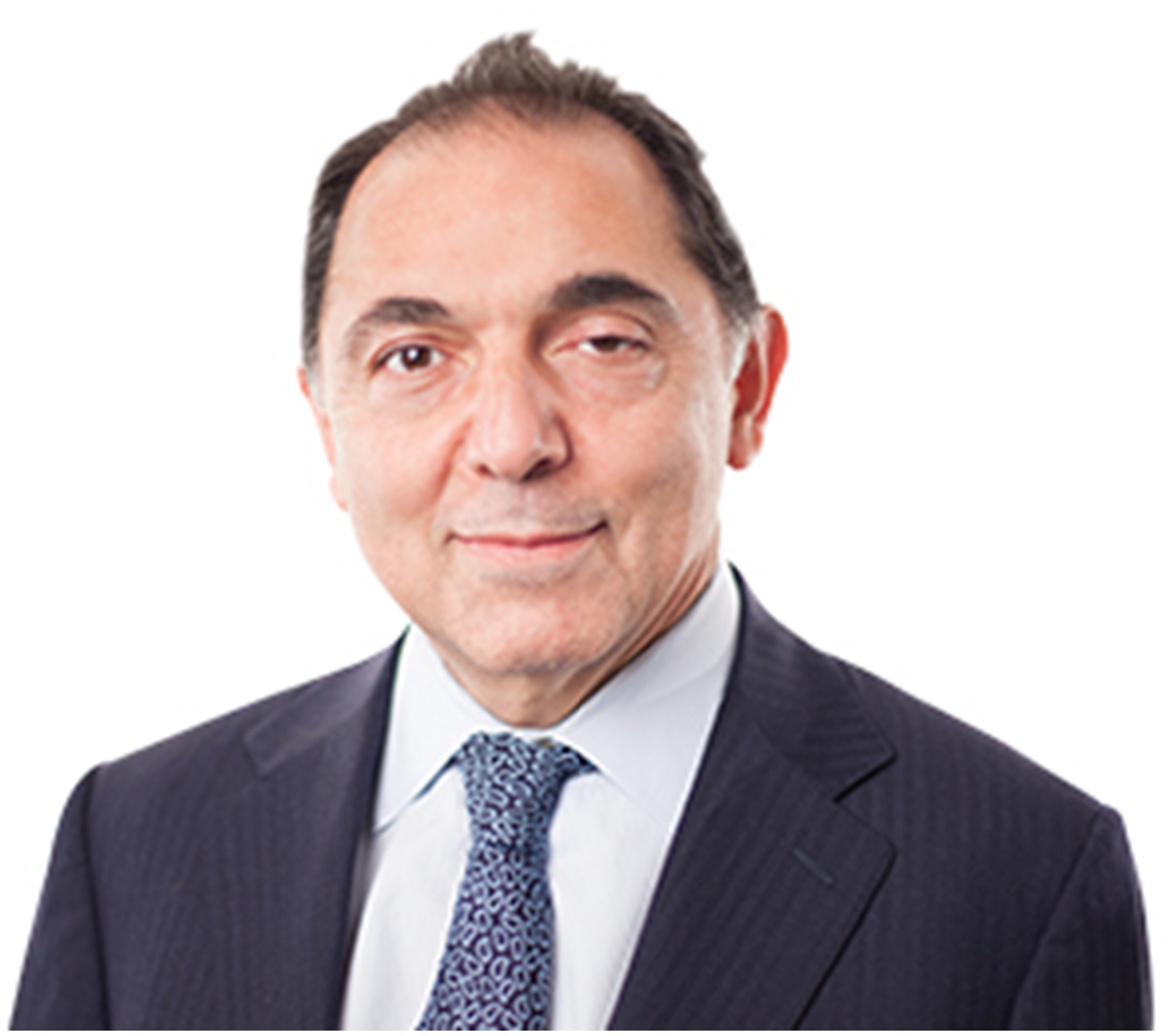
Javad Mokhbery
CEO and President
FUTEK Advanced Sensor Technology, Inc.
Irvine, California, United States
By all accounts, Javad Mokhbery is a brilliant man. Without any financial help, he built his company, FUTEK Advanced Sensor Technology, Inc., from one bed room apartment to be the leading manufacturer of sensors for a wide variety of industries throughout the world. As a mechanical engineer and innovator, he stays ahead of the trends and positions his company as a pioneer within the evolving industries that he serves. Today, his sensors are used on drills deep down in the Earth for the oil and gas industry and on the surface of Mars where NASA’s rover Curiosity has been exploring since 2012 and making new discoveries each day with the help of FUTEK’s technology. FUTEK sensors are also used in the manufacturing process of the world’s leading smartphones and wearable devices. Indeed, he is extremely smart.
Yet this is not what makes Javad an effective entrepreneur. Pure intelligence, he says, only gets one so far in business. Even if you boast the top mind in your field and balance it with a knack for business and science, you are still missing a huge piece of the equation – emotional intelligence (EQ).
Javad says his EQ has been his key to entrepreneurial success. It’s not something that can be taught through a traditional education, and it’s not necessarily something one is born with either. Rather, Javad credits his unique upbringing and life experiences.
Born in Iran in 1952, Javad was raised by religiously conservative parents, and his father was a successful businessman. By the early 1960s, Javad knew he wanted to study in America, but his parents did not approve. Refusing to take “no” for an answer, he began recruiting random tourists off the street and invited them over for lunch or dinner to expose his folks to the West and show them that foreigners weren’t bad while making friends, practicing English and learning their culture. Then again, we are talking about 1960s; there were no internet or social media like today.
The strategy forged a special kind of EQ in Javad, which serves him to this very day. As an Iranian pre-teen, he said that conversations with strangers from places like Switzerland and Germany helped him empathize and connect with people from all walks of life. He was able to connect with his parents in a powerful way as well. Emotional Intelligence is largely about knowing what other people want or need, and Javad pulled this off in an unusual fashion. When he was 19, they agreed to let him go study in England.
In January 1974, he moved from London to Detroit to advance his education first at DIT (Detroit Institute of Technology). Then at OCC (Oakland Community College) and finally at the Lawrence Institute of Technology (LIT). The move was drastic. He wound up in some of the most dangerous areas of the city and worked there as an ice cream salesman to pay for his education. Though he easily could have, Javad never asked his parents for money. Instead, he worked hard and used his EQ to forge relationships in some of the most undesirable neighborhoods of Detroit to pay for this stage of his education.
Upon graduating from LIT, Javad worked his way up at sensor Production Company in Detroit called GSE. With no green card but with practical training permit from the government, he started in 1979 as the lowest paid engineer at the company and left in 1985 as the highest paid engineer, just below his manager. Then he moved to Southern California to another sensor company in Cerritos called Transducers Inc. and later worked primarily as a contractor to aerospace manufacturers at Rockwell International in Downey, including NASA’s Space Shuttle program.
In 1988, Javad Used up all his saving to buy his first house in Aliso Viejo Ca, got married, ended his journey and his full-time job at Rockwell International and committed to FUTEK with his brother Mohammad Mokhberi, who joined him from Sweden. Upon Javad’s Arrival in California, FUTECH was originally founded in 1985 , which stands for “future technology,” They built the company from the ground up with no money and no commercial loans. The only financing Javad had available to him was his home equity loan on his house in Aliso Viejo and credit cards.
For seven years they struggled, but by the mid-1990s FUTEK had caught its stride, and it was innovating sensors ahead of any other manufacturer in the space. Javad said FUTEK has been successful because of its ability to foresee where other industries are going and develop a sensor for that new direction before the technology needing the sensor actually exists. This approach which follows Blue Ocean Strategy as well as Bayesian Strategy has enabled FUTEK to make its own markets and have huge sectors essentially all to themselves.
The result has been almost two decades of exponential growth. FUTEK employs over 140 people at its Irvine headquarters, where it develops and manufactures all of its sensors. Javad takes great pride in making all of his products in the U.S., and he uses all American-sourced raw materials as well. Not only does he not buy components from China, which is done by many other players in his market, but as a global U.S. company he sells many sensors to China at a premium.
FUTEK’s sensors have a great reputation with high volume medical, aerospace and automation OEM accounts maintaining a zero field reject rate, with the mindset that “Failure is not an option“, something that is extremely rare at this level of precision manufacturing. However, an even greater source of pride for Javad is the fact that FUTEK has never laid off an employee since inception. Even during a lean period following implementation of Oracle Business Suite in 2009, FUTEK kept everyone on staff even though the orders had temporarily dried up. He puts machinist and skilled technicians to work doing other things around the office, such as landscaping, just to keep them productive until activities picked up again.
He insists on a “quality culture” as opposed to “quality control,” which gives manufacturing ownership to his team and yields FUTEK’s coveted zero field rejection rate. The dedication to his team is part of Javad’s Emotional Intelligence philosophy towards entrepreneurship, and it guides different management strategies that he’s deployed at FUTEK.
10:40 – 11:20 am – Keynote II
 Dr. Maj Dean Mirmirani
Past Interim Dean, College of Engineering, Lawrence Technological University, Southfield, Michigan
Dean Emeritus of Engineering, Embry-Riddle Aeronautical University, Daytona Beach Campus. Florida
Dr. Maj Mirmirani received his Ph.D. and M.S. in Mechanical Engineering from the University of California, Berkeley, and his B.S. in Mechanical Engineering from Tehran Polytechnic (Amir Kabir University). Prior to starting his career in the United States in 1981, he spent a year at the Imperial College of Science and Technology’s Department of Electrical Engineering in London as an academic visitor working on the development of a 64-lead electrocardiography (EKG). In 1981, he joined the California State University, Los Angeles’s (CSULA) Department of Mechanical Engineering, where he served as department chair for 12 years. At CSULA, he founded and directed the Air Force Office of Scientific Research (AFOSR)-funded Multidisciplinary Flight Dynamics and Control Lab and was also one of the two co-directors of the NASA-funded University Research Center (SPACE Center). During his tenure at CSULA, he led several major research projects totaling to over $20M in funding. Most notable among them were the pioneering work on modeling, simulation, and control of airbreathing hypersonic flight vehicles; design and development of a high-endurance hydrogen fuel cell-powered UAV (the first such university-built vehicle to fly); design and fabrication of a full-scale precision segmented reflector testbed with shape control and pointing accuracy requirement comparable to a space-based system (a precursor to the J.W. Web); as well as development of a control-oriented multidisciplinary software package for aerospace systems design a project funded by AFOSR. While at CSULA, he also spent two summers at the National Institute of Health’s Division of Mathematical Biology working on mathematical modeling for optimal delivery of monoclonal antibodies in treatment of cancer.
In 2007, Dr. Maj Mirmirani joined Embry-Riddle Aeronautical University as the dean of the College of Engineering at the Daytona Beach Campus. During his fifteen-year tenure, for two years (2016-2018) he also served as the interim senior vice president for academic affairs and research. In August 2021, he retired from ERAU and was given the title of Dean Emeritus. However, he was recruited to serve as the interim dean at the Russ College of Engineering and Technology at Ohio University, June 2022 –July 2023.
In 2024- 2025, Dr. Maj Mirmirani joined Lawrence Technological University as the interim dean of the College of Engineering.
Dr. Mirmirani is a Fellow of the ASME, a Fellow of the Royal Aeronautical Society, and an Associate Fellow of the AIAA. He is an instrument-rated private pilot and a member of the Airplane Owners and Pilots Association.
11:20 am – 12:00 pm – Keynote III
12:00 – 12:40 pm – Keynote IV
October 13, 2026 (Wednesday) – Day 2
10:00 – 10:40 am – Keynote V
10:40 – 11:20 am – Keynote VI
11:20 am – 12:00 pm – Keynote VII
Richard Walker
Technical Director and Operations
FUTEK Advanced Sensor Technology, Inc.
Orange County, California, United States
12:00 – 12:40 pm – Keynote VIII
October 15, 2026 (Thursday) – Day 3
10:00 – 10:40 am – Keynote IX
10:40 – 11:20 am – Keynote X
11:20 am – 12:00 pm – Keynote XI
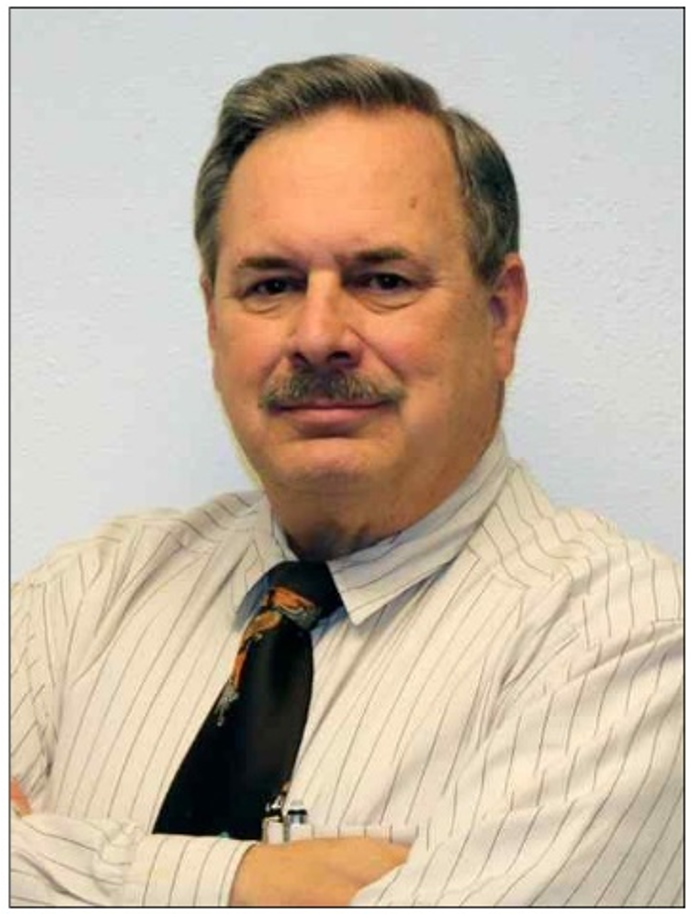 Thomas Bowles, MSEE, CQE, CQA
Director of Quality Assurance
FUTEK Advanced Sensor Technology, Inc.
Orange County, California, United States
As Director of Quality Assurance for FUTEK Advanced Sensor Technology, Inc. in Irvine, CA, Thomas oversees all Quality, Regulatory, Training, and Safety operations for the Corporation, which designs, manufactures, and markets Force, Load, Torque, and Pressure sensors domestically and in 49 countries around the world. In his 22 years as the head of Quality for FUTEK, he has led the Quality team on every major technological sensor program, including sensors for robotic surgery and sensors for NASA’s Mars Rover Curiosity program which continues to send back extraordinary scientific discoveries from the surface of Mars. Thomas also oversees the company’s ISO certifications, including ISO 9001, ISO 13485, ISO 17025, ISO 27001, and AS9100. He is very active in the local chapter of the American Society for Quality (ASQ) as a frequent speaker at technical clinics and has passed the certification exams to be recognized as a Certified Quality Engineer (CQE) and a Certified Quality Lead Auditor (CQA).
Before joining FUTEK, Thomas was the Manager of Reliability and Test Systems for Ultraviolet Devices, Inc. in Valencia, CA, where he directed reliability engineering and reliability growth testing programs for ultraviolet disinfection and sterilization equipment. He holds a US Patent for HVAC sterilization equipment. Before that, he was the Deputy Program Manager of GPS Programs at Magnavox Advanced Systems in Torrance, CA, where the first production GPS receivers for military and civilian use were built. His professional career began at Hughes Aircraft Company after receiving his Master’s Degree in Electrical Engineering from Cal State University, Northridge. He also taught Electrical Engineering as an instructor at his university. At Hughes, he participated in the electronic and digital design of radar and missile systems, including various black programs. Hughes also sponsored his post-Graduate work at USC. Prior to Hughes, he joined the US Air Force Auxiliary, became a pilot, and flew Search and Rescue (SAR) missions around LA and Ventura Counties. Thomas is an FAA-licensed Commercial Pilot and is also a former LAPD Police Officer, having worked street patrol in the Van Nuys Division and later in the Westchester Division.
12:00 – 12:40 pm – Keynote XII